Practical advice for safe handling, mixing, storage and disposal – from small repairs to major projects.
High-performance epoxy delivers exceptional strength, durability and versatility across a wide range of applications. And working with it safely doesn’t need to be complicated.
At Megapoxy, our commitment to safety includes our own operations and the customers, contractors and crews who use our products every day.
Here are seven essential resin safety practices to follow, from preparation and mixing through to storage and disposal.

1. Start with the right product information
Different formulations, applications and working conditions may call for different handling procedures.
Before starting, familiarise yourself with two important resources for the particular products you’re working with.
- Safety Data Sheets (SDS): Provide product-specific information on safe handling, personal protective equipment (PPE), storage, first aid and disposal.
- Technical Data Sheets (TDS): Provide instructions on mixing ratios, working times, application conditions and curing.
Most Megapoxy epoxy systems have two components: Part A (resin) and Part B (hardener). Always check the SDS for both components before use.
You can access Megapoxy’s Safety Data Sheets and Technical Data Sheets here.
2. Wear appropriate protective equipment
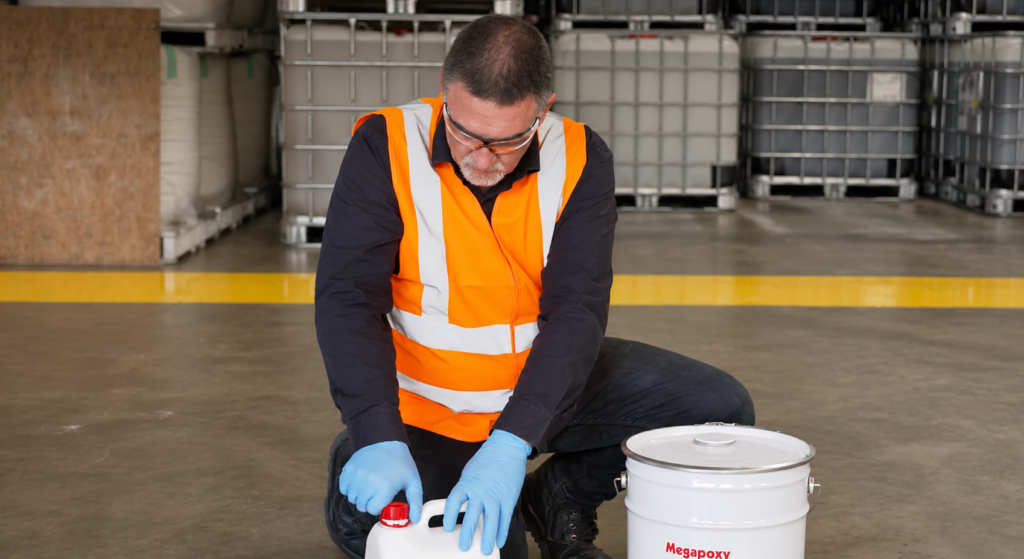
PPE needs vary depending on the product and application, but commonly include the following.
- Protective gloves: Wear chemical-resistant gloves suitable for the product and task. Check the relevant SDS for guidance on suitable glove materials.
- Eye protection: Wear suitable safety glasses or other eye protection to prevent accidental splashes.
- Protective clothing: Wear appropriate work clothing to minimise skin contact.
- Safety footwear: Wear suitable footwear for the work environment.
Check the relevant SDS and your workplace risk assessment for any additional PPE requirements, including respiratory protection, based on the product and working conditions.
3. Prepare your work area
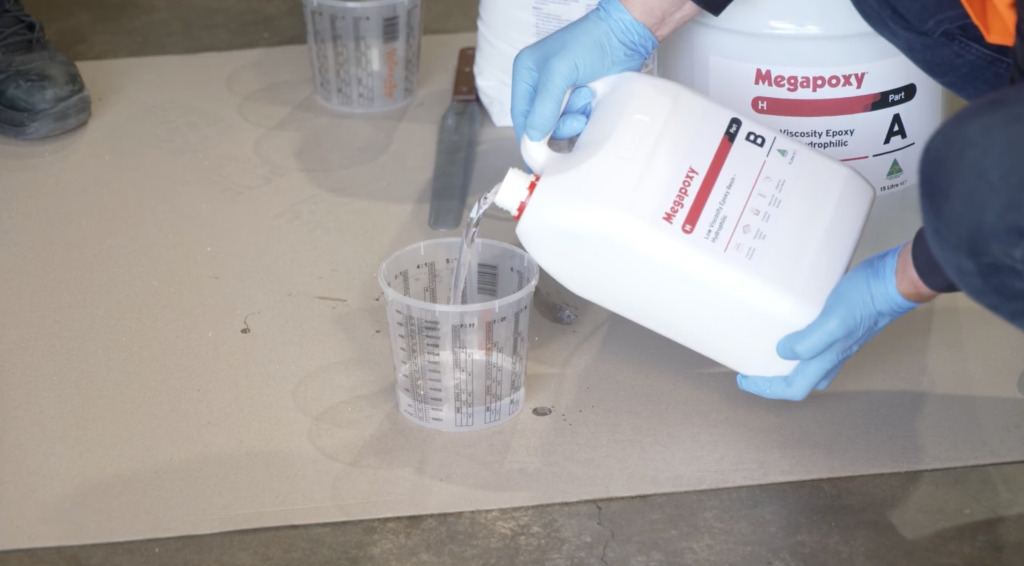
A well-organised workspace makes epoxy application easier, faster and safer. Here are some important steps before opening or mixing your product.
- Ensure suitable ventilation: Follow the SDS recommendations, particularly when working indoors or in enclosed areas.
- Prepare your equipment: Have mixing containers, tools and application equipment ready before starting.
- Keep the area clear: Remove unnecessary materials and keep food and drinks away from the work area.
- Plan for clean-up: Have suitable cleaning materials and spill-control equipment available.
- Check first-aid arrangements: Ensure appropriate first-aid and emergency washing facilities are accessible, as specified in the SDS.
For professional applications, these preparations should form part of the site’s established safety procedures.
4. Follow good mixing and handling practices
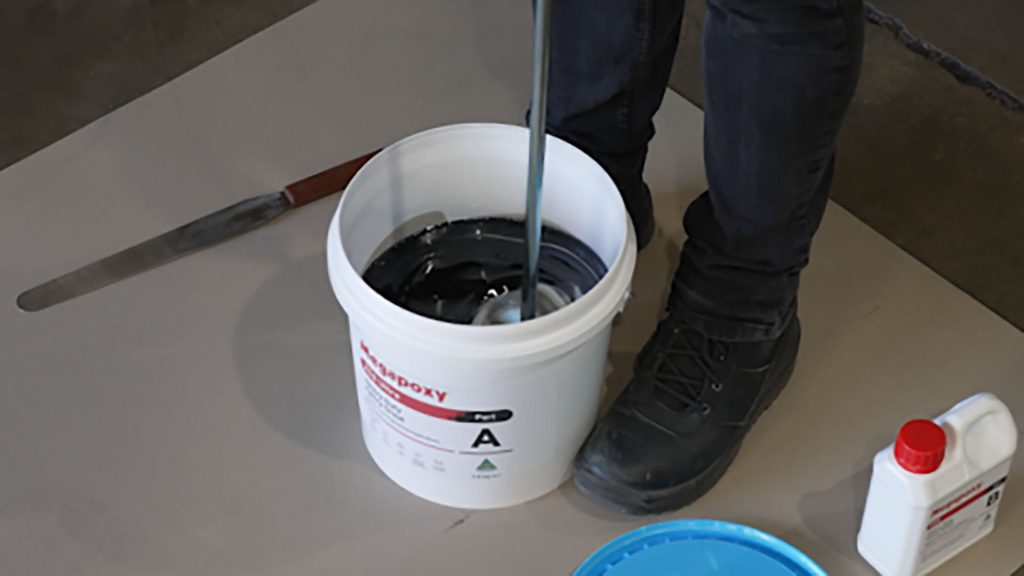
Accurate mixing is essential to achieving the intended performance of a two-part epoxy system.
- Follow the specified mixing ratio: Measure Part A and Part B according to the product’s technical instructions. Ratios vary between Megapoxy systems.
- Mix thoroughly: Follow the recommended mixing method and time to achieve a consistent blend.
- Prepare manageable quantities: Mix only what can be applied within the product’s stated working time.
- Consider working conditions: Temperature influences epoxy working time and curing. Check the product’s recommended application conditions.
- Avoid unnecessary contact: Use suitable tools and application methods to minimise contact with uncured materials.
Remember that once resin and hardener are combined, the curing reaction begins. Working time is limited, so plan the application before mixing.
5. Keep your work area clean
- Clean up spills promptly using appropriate protective equipment and absorbent materials, following the relevant SDS.
- Collect waste in suitable, labelled containers for disposal.
- Prevent uncured epoxy from entering drains, soil or waterways.
- Clean application tools using the method recommended for the product.
- Maintain good personal hygiene, including washing hands thoroughly after handling epoxy and before eating or drinking.
- Wash contaminated clothing and other protective equipment before storing or reusing.

6. Store epoxy products correctly
Correct storage supports both resin safety and product performance.
Megapoxy generally recommends storing products in cool, dry and well-ventilated conditions, away from direct sunlight and excessive heat.
Good storage practices include:
- Keeping products in their original containers, with labels intact.
- Closing containers securely when not in use.
- Storing products upright and checking for leaks.
- Keeping materials away from food and incompatible substances.
- Following any product-specific temperature and storage requirements.
Always check the relevant SDS and TDS, particularly when storing products for extended periods or in environments with significant temperature variations.

7. Dispose of leftover materials responsibly
Responsible disposal is an important final step in any epoxy application.
Uncured resin, hardener, mixed epoxy, contaminated cleaning materials and empty containers may have different disposal requirements. Follow the relevant SDS and applicable waste-disposal regulations, including recycling materials and containers where appropriate.
Resin safety: A quick checklist
Before your next Megapoxy application, make sure you’ve covered the essentials.
- Read the relevant SDS and TDS for the product.
- Select appropriate PPE for the task.
- Prepare a clean, suitably ventilated work area.
- Have the necessary tools and clean-up materials ready.
- Follow the specified mixing ratio and working time.
- Store unused products correctly.
- Clean up and dispose of materials according to the SDS and local requirements.
Planning your next project?
Explore our videos and guides for clear instructions or contact your local stockist or distributor for product and application advice.
Found this useful?
Subscribe below to receive specification advice, real project examples and practical application tips.