A guide to epoxy curing – and matching temperature, working time and performance to your project.
Have you ever wondered how long epoxy takes to dry? The answer is … it doesn’t.
Epoxy curing is a chemical process (known as polymerisation) where resin and hardener react to form a tightly interconnected, three-dimensional solid. This chemical reaction is what gives epoxy its strength, rigidity and durability allowing it to bond strongly to the substrate. Correctly selected, mixed and cured, epoxy has an exceptional ability to withstand impact, abrasion, chemical attack and moisture.
So, the answer to “how long does epoxy take to dry?” starts with understanding that curing is a different process from simple “drying”, which involves liquid evaporating.
Epoxy curing: the basics
- Resin and hardener react to form a solid, durable material.
- When the two parts are combined, the reaction begins immediately on site.
- There are two key stages to the curing process.
- The first stage is the working time: how much time there is to apply the mixed epoxy before it starts to harden.
- The cure time: how long it takes for the epoxy to cure (or reach full strength) and be handled, loaded or put into service.
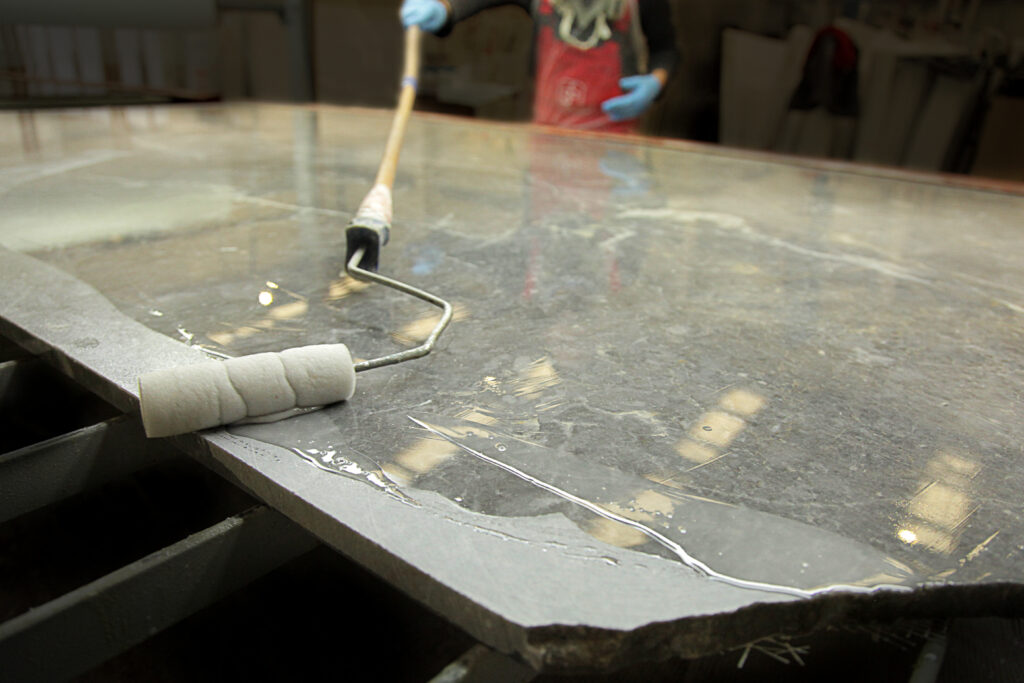
What affects epoxy cure time
- Mix ratio. Epoxy resins are formulated to cure at a specific resin-to-hardener ratio. Adding too much or too little hardener does not make the epoxy cure faster or stronger: in fact, it will compromise performance by preventing proper curing, leaving the epoxy tacky, soft or brittle and reducing its strength.
- Proper mixing. Even when the correct mix ratio is used, insufficient mixing can leave pockets of unmixed resin and/or hardener: either encapsulated (reducing performance) or as a surface defect (tackiness). Thorough mixing is essential for consistent strength and even curing.
- Ambient temperatures and humidity: Epoxy curing speeds up as temperature rises, so a product that gives comfortable working time at around 20°C can start to harden much faster on a 35–40°C day. In high humidity, defects such as tackiness, cloudiness or a waxy film (amine blush) can be caused by warm moisture in the air, so it is important to follow the product’s recommended environmental conditions and ensure the substrate is dry and above the dew point.
- Exotherm and batch size: The curing reaction gives off heat (exotherm). In small batches that heat is very limited. In very large mixes or deep sections the temperature builds up, which accelerates curing and reduces available working time.
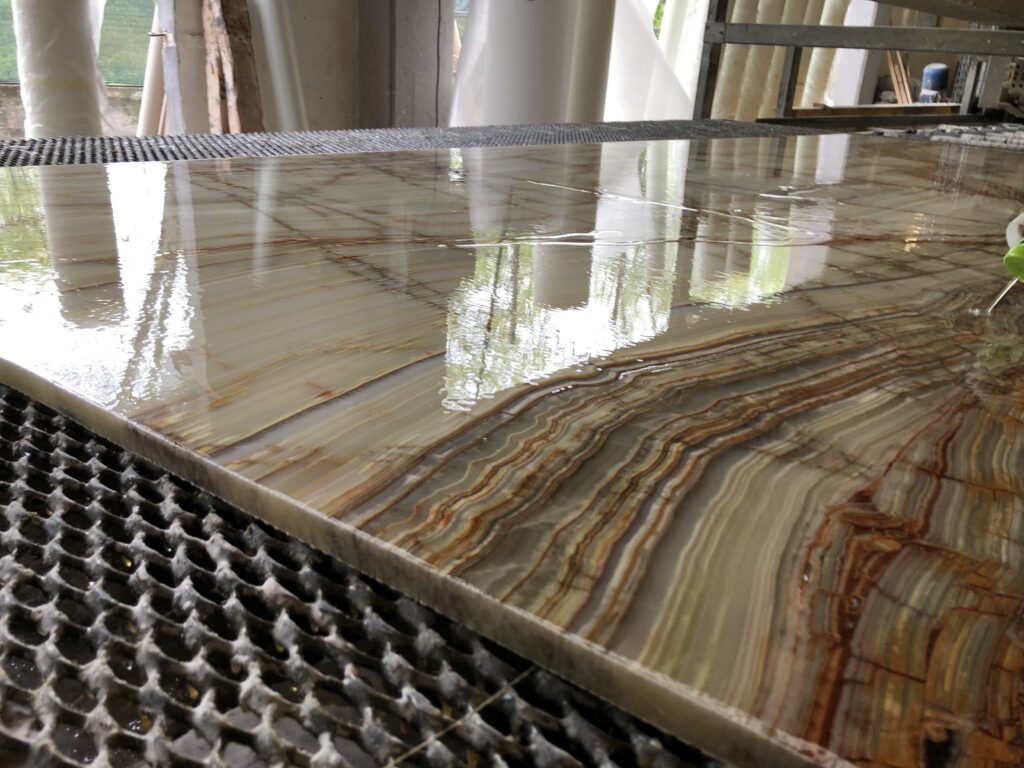
Why time isn’t always of the essence
Because there isn’t a single ideal cure time for every application, how long curing takes isn’t the only consideration when selecting a product.
It’s about matching the way a product cures with what it needs to be used for: a faster cure isn’t always better, nor is a slower cure a worse performer. In general, products with a longer working time also take longer to reach full strength, while fast-curing products trade shorter working time for a quicker return to service.
Different projects require different balances of working time, setting speed and early strength gain. It’s also important to consider site conditions, downtime or closure requirements, as well as long-term performance.
The most successful projects are when the right cure profile allows the installer enough time to apply the product while enabling the asset to become operational again as soon as possible.
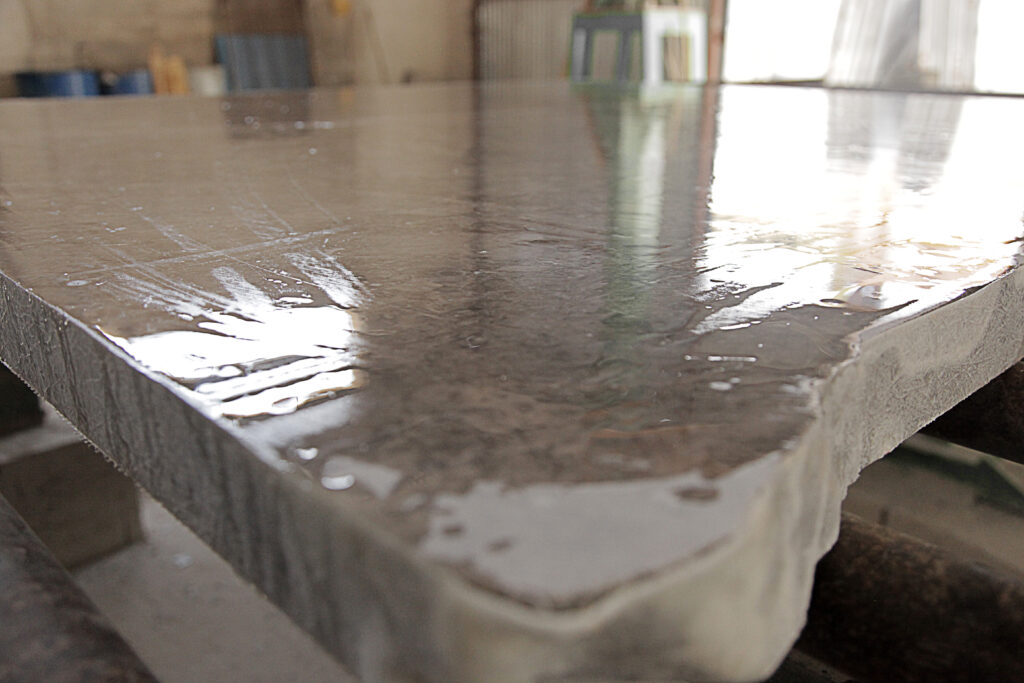
Perfect match: Choosing the right epoxy cure profile
1 Project size & schedules
A fast-curing epoxy is ideal for small crack repairs or on-the-spot critical fixings, such as Megapoxy PF which sets in around seven minutes and develops more than half its ultimate strength within about 15 minutes of mixing. For extensive bonding or jobs with multiple repairs, the slower-cure Megapoxy PM allows installers enough time to mix, apply and position the product for around 45 minutes at 25°C before it hardens.
Complex infrastructure projects often need to balance working time needed with tight schedules. For example, Tasmania’s landmark Bridgewater Bridge project used Megapoxy PME SBA to bond more than 1,000 precast concrete bridge segments. Its non-sag consistency made it ideal for vertical and overhead application – and its rapid cure time helped maintain construction momentum while still enabling accurate positioning and alignment.
2 Hot conditions
In hot weather, installers often choose formulations with longer working time and plan application for cooler parts of the day to keep curing under control. Temperatures in Wingfield, South Australia can reach 40°C in summer, so when Megapoxy was asked to supply a high‑strength epoxy coating for the flooring of Vittoria Coffee’s showroom and warehouse, Megapoxy 132 Grey was selected for its high strength and reliable application even in higher ambient temperatures – and installers got the most out of the product by working during earlier, cooler mornings.
3 Reliable curing in tough conditions
Applications like water infrastructure and marine environments demand reliable curing in challenging conditions. For example, Megapoxy 206 Ultra Grey was chosen to restore timber and steel piles supporting the Geelong Port’s hybrid concrete and timber wharves and jetties – extending their service life by at least 50 years in a tidal, semi-submerged environment.
4 Heat-generating deeper pours
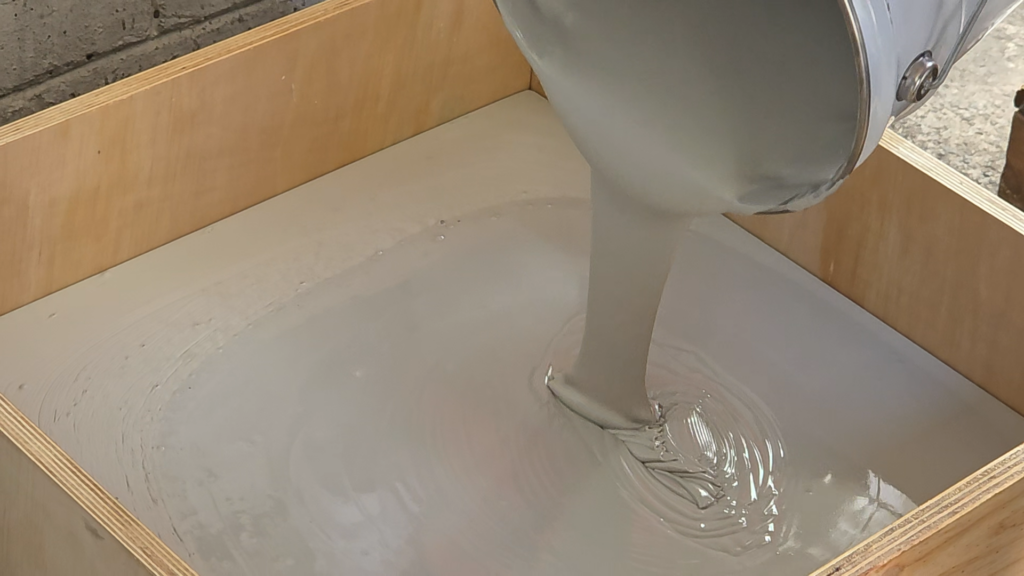
Projects involving large-volume or deep-void grouting face the risk of excessive heat build-up as the epoxy cures, which can lead to overheating, distortion or cracking. Megapoxy Deep Pour Grout is formulated to generate less heat during curing, allowing deep voids up to 300 mm to be filled in a single continuous pour. In hot conditions or where large volumes of grout are being placed, it may also be selected for shallower pours to provide a slower, more controlled cure and longer working time.
Checklist for choosing epoxy cure profiles:
- How much working time is needed to complete the application?
- How quickly does the asset need to return to service?
- What will the ambient temperature be during application?
- Will the epoxy be applied in large volumes or deep sections?
- Is the substrate dry and are humidity/dew point conditions suitable?
- Does the application require a fast-strength or longer-working-time formulation?
- Have the correct mix ratio and mixing procedures been planned?
Need advice for choosing the right solution and cure time for your project?
Megapoxy’s formulations are specifically designed to solve real application challenges – from rapid repairs to longer required working times, deep pours to demanding environments. Backed by advice and technical support, we work closely with our clients to match the best solutions and approach to your project.
Use our easy Solution Selector, find your local distributor or contact us for technical advice.