Natural stone is beautiful but unforgiving. Here’s how stone epoxy systems help preserve its strength, appeal and value from start to finish.
In high-end developments, natural stone communicates elegance and scale. Done well, it looks effortless: tight joints, invisible seams, consistent colour and a continuous surface.
But achieving that result isn’t simple, with critical decisions about slab reinforcement, fixing and long-term performance.
Specialist epoxy helps stone perform as beautifully as it looks, from sealing and strengthening to bonding and waterproofing.
For architects, engineers, fabricators, installers and stone professionals, the best results come from matching the right stone epoxy to each project phase.

When that happens, stone becomes a defining feature in spaces like:
- grand entrances and arrival lobbies
- executive floors and boardrooms
- flagship retail spaces
- luxury bathrooms and spa suites
- pool decks and wind‑exposed terraces
- civic plazas and public spaces
- statement facades.
From Quarry
to Lobby
How epoxy systems support natural stone at every stage
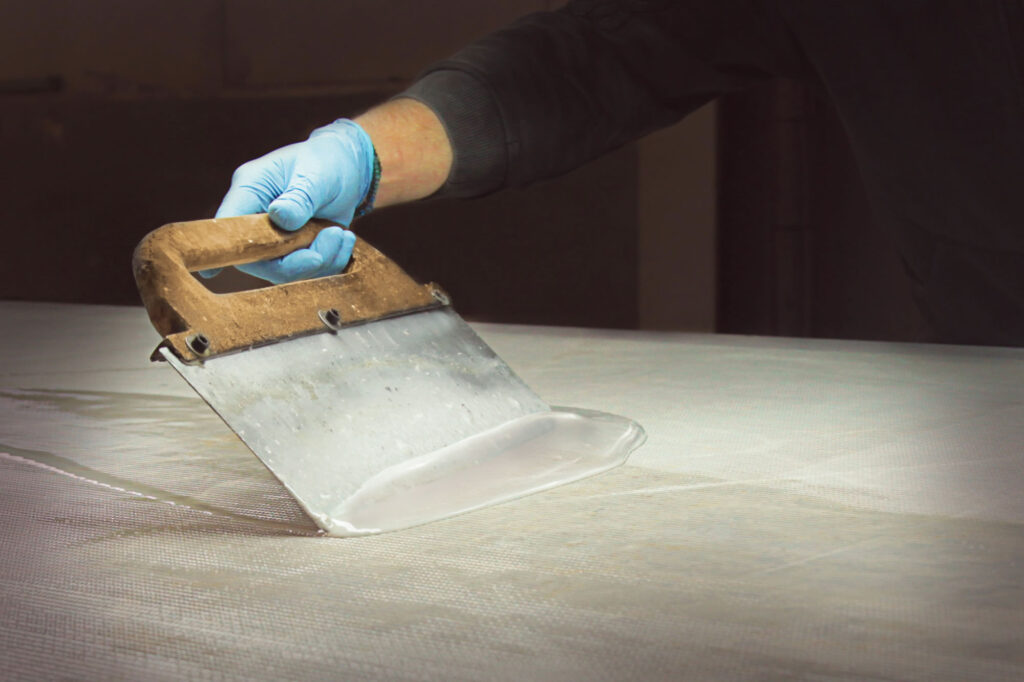
1 Reinforce + Protect
Quarrying, slab processing + transport
Strengthen fragile stone, seal fine cracks and reinforce slabs before fabrication and installation.
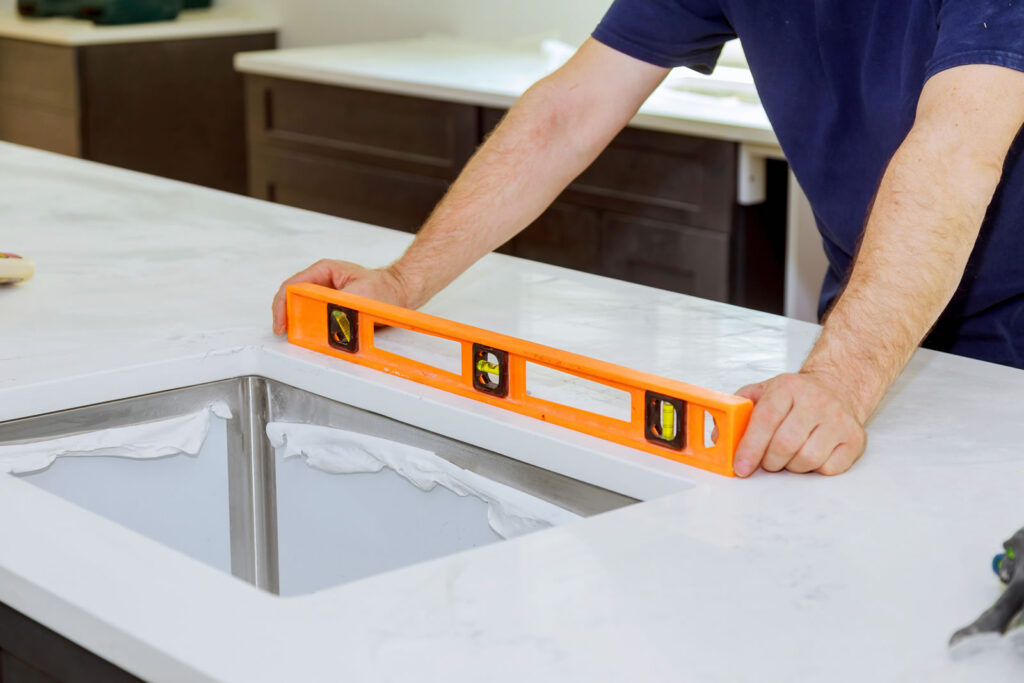
2 Fabricate + Finish
Manufacturing benchtops, vanities, stairs + custom stonework
Create strong joins, clean mitres and colour-matched repairs for a high-quality finish.

3 Waterproof + Install
Facades, wall linings + stone cladding
Waterproof suitable substrates and install stone using spot-fixing or full-bed bonding.

4 Repair + Restore
Existing stone, facades + architectural features
Repair cracks, chips, damaged edges and loose stone while preserving the original finish.
An epoxy system for any natural stone project
Facades • Lobbies • Floors • Benchtops • Vanities • Wall Panels • Stairs • Feature Stone
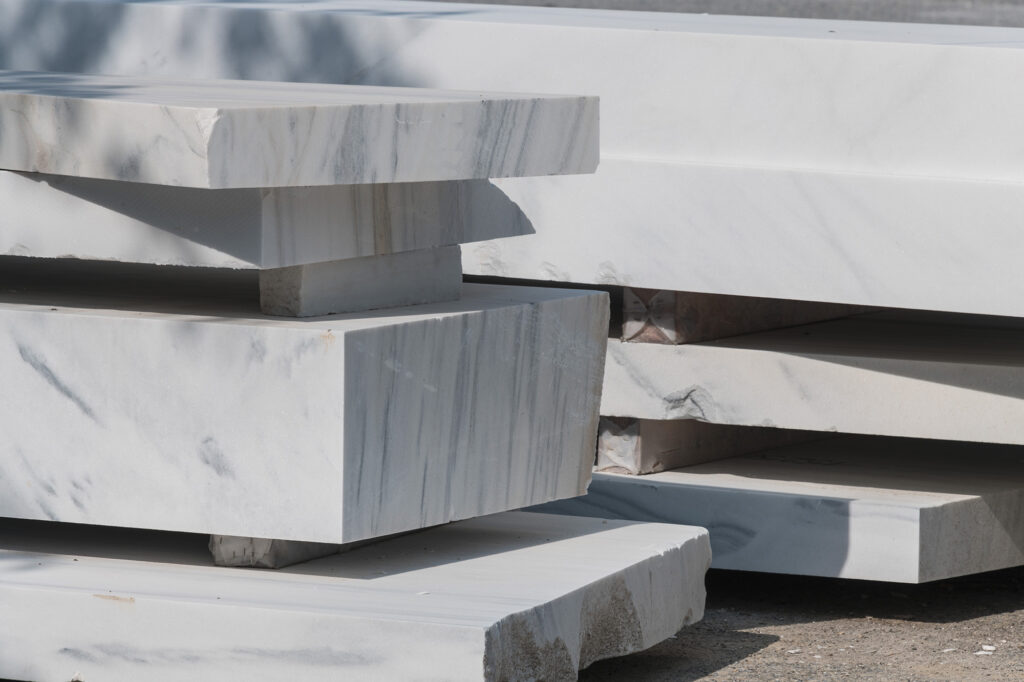
Quarry and processing: protecting each slab
The finished result is often shaped long before the stone is installed.
In quarrying, processing and slab handling, natural faults and fine cracks affect how confidently a slab can be moved, cut, polished or fabricated.
This is especially true for thin or brittle marble, which is vulnerable to bending and breakage during handling and transport. Strengthening the slab at this stage reduces the risk of damage and supports long‑term structural integrity.
Extra-low-viscosity epoxy resins like Megapoxy HX penetrate fine cracks, seal porous areas and reinforce slabs. Used with fibreglass mesh, they help strengthen stone from within, reducing breakage during handling and creating a more stable surface for polishing.
This early reinforcement reduces risk and waste when working with high-value stone.

Fabrication and manufacturing: clean joins and controlled detail
Fabrication and manufacturing is when slabs become benchtops, vanities, counters, panels, stair treads, furniture and other architectural details.
At this stage, epoxy systems for stone fabrication need to deliver:
- thin bond lines for mitred edges and build‑ups
- translucent or colour‑matched finishes on visible joins
- easy handling and a flush finish when polished back
- effective but invisible repairs for chips, cracks, and voids.
For manufacturing a 3‑metre marble benchtop, Gitani Stone chose Megapoxy 63 for the details that matter, including:
- translucent finish for light-coloured marble
- thin glue line
- no picture framing along joints
- exceptional bond strength and impact resistance
- simple mix ratio and fast curing, for efficient manufacturing.
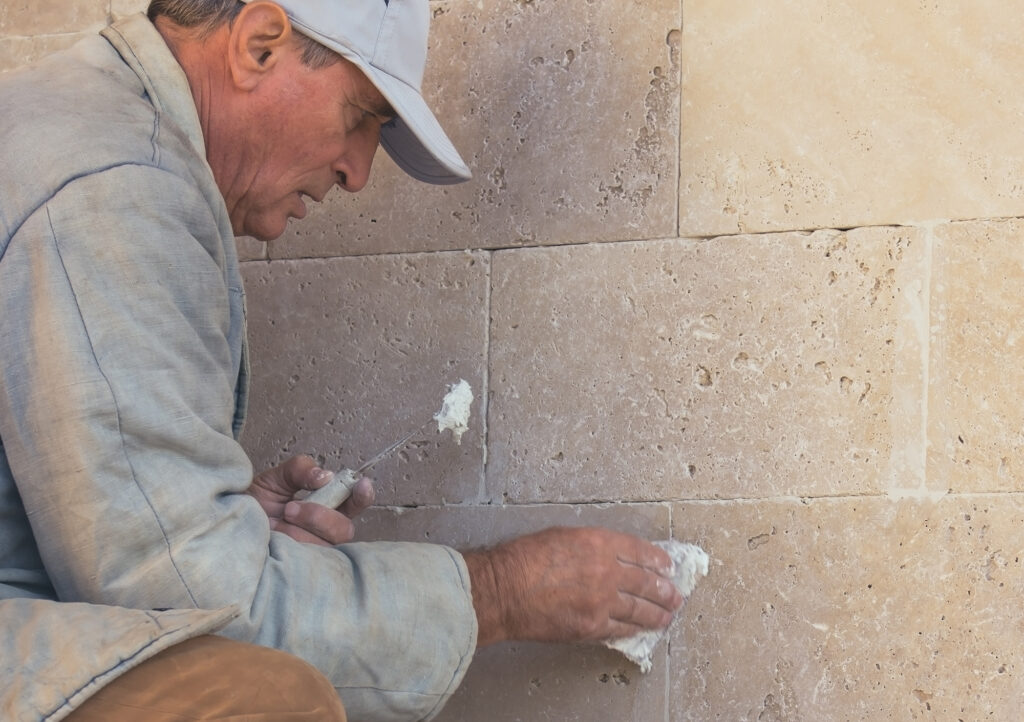
On site: fixing systems that suit real substrates
Stone installation rarely happens in perfect conditions. Walls can be uneven, substrates vary, and work may involve vertical and overhead surfaces. The fixing system has to suit the surface, material and design intent.
The right epoxy systems can support:
- non‑sag spot fixing for vertical and inclined cladding panels
- full‑bed bonding of stone and tile where a continuous layer is required
- fixing over compatible epoxy membranes on wet walls and facades
- on site repairs to chips, cracks and movement joints without replacing whole elements
Non‑sag epoxy paste adhesives like Megapoxy PM and PF let installers position panels and tiles accurately, holding them in place without running or slumping. Spot fixing can create a ventilated cavity behind the stone, supporting airflow, insulation and open-joint designs.
For an upmarket apartment facade, Megapoxy PM was used to bond stackstone to a large, out‑of‑plumb precast concrete wall. Using a simple spot-fixing technique, its non-sag properties suit vertical, inclined or overhead work – with elasticity for temperature variations and seismic movement.
The result: a strong, safe and striking facade that will stand the test of time.

Behind the stone: waterproofing and bonding as one system
When it comes to fixing stone to waterproofed walls, a smart epoxy solution combines a waterproofing membrane with a compatible adhesive.
Megapoxy H can be used as a primer and sealer over suitable porous substrates, creating a waterproof layer that integrates into the surface. Megapoxy PM and PF are then recommended for spot-fixing stone to the facade.
This integrated approach was used for a prestigious Sydney home, where sandstone was selected for a curved exterior facade and overhead sections.
The external CFC sheeting was coated with Megapoxy H, embedded with a fine aggregate, to waterproof and strengthen the surface. Megapoxy PM White was then used to spot-fix the sandstone, providing non-sag control and robust adhesion.
The result: a striking sandstone statement with clean lines, complex geometry and the durability needed for an exposed environment.

After installation: repair that respects the finish
Epoxy systems can help repair chips, cracks, holes and damaged edges – with products to match stone, colour, working time and finish. On many projects, that means damaged stone can be repaired in place instead of being cut out and replaced.
Different epoxy systems play different roles, for example:
- low‑viscosity epoxies like Megapoxy Megapoxy HX for filling cracks and voids, and consolidating weak areas.
- rapid‑set paste like Megapoxy PF for quick tile re‑fixing and urgent repairs.
- gel adhesives like Megapoxy 63 and 69 for fine edge work, chip filling and cosmetic stone repairs.
For high‑value stone, a good repair is not only about strength. It is about respecting the material, the setting and the original workmanship.
Ready to select and specify the right epoxy system for your natural stone project?
Download our Natural Stone Products Guide, see our application page for practical guidance, or talk to your local Megapoxy team for advice.