How viscosity, or “flow”, can make or break projects of all sizes.
From major infrastructure to precision repairs, specifying epoxy with the right viscosity is critical to performance. If viscosity isn’t matched to the job, the epoxy won’t fully penetrate the crack or substrate, can drain or slump before curing, or fail to properly bond – leading to weak repairs and rework.
When to use low vs high viscosity epoxy
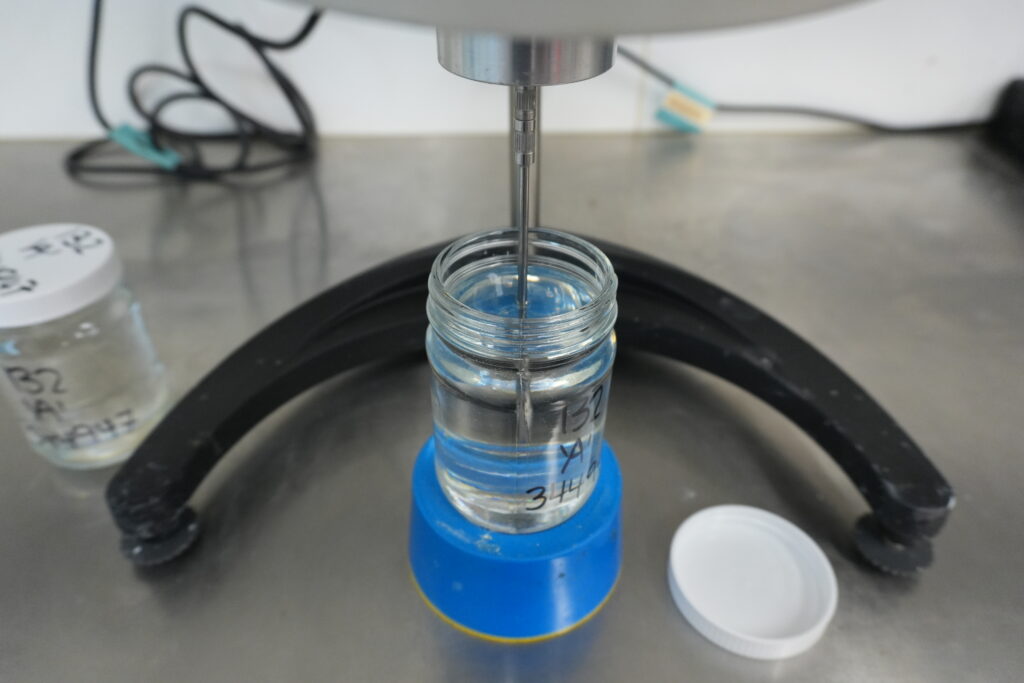
Viscosity is simply a measure of how easily a material flows. In epoxy terms, high viscosity means a thicker material that resists flow and stays in place.
- Low-viscosity epoxies flow easily, so they can penetrate fine cracks, porous substrates and voids.
- High-viscosity epoxies are thicker, so they stay in place, hold their shape, and can bridge or fill gaps.
The key isn’t just choosing a “high” or “low” viscosity: it’s selecting the viscosity that delivers the behaviour the job demands.
Choosing epoxy viscosity by application
Critical crack repairs: reaching below the surface
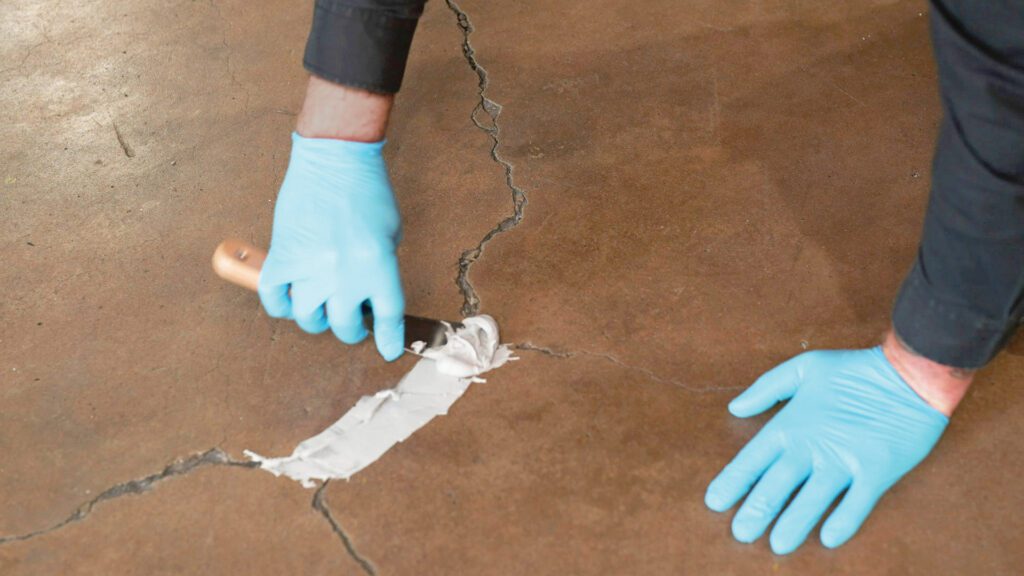
For non-structural cracks, viscosity depends on the crack profile. Fine or hairline cracks require low-viscosity resins to ensure full penetration. Wider, shallow cracks are better repaired with higher-viscosity pastes like Megapoxy HT or P1, allowing the material to stay in place and create a smooth, even finish.
For structural cracks, epoxy must be able to travel the full depth of the crack to prevent further movement and bond the structure from the inside out. This is typically achieved using a crack injection repair system with low to extra-low viscosity formulations like Megapoxy H or HX, which can penetrate fine fissures and fully wet out the internal surfaces.
This approach was used for repairs to a concrete bridge pier, where our precision balloon injection system delivered low viscosity epoxy deep into cracks – for strength, accuracy and minimal clean-up.
Vertical and overhead: when it has to hold
On vertical or overhead surfaces, flow becomes a liability, including:
- bridge soffit repairs
- vertical concrete remediation
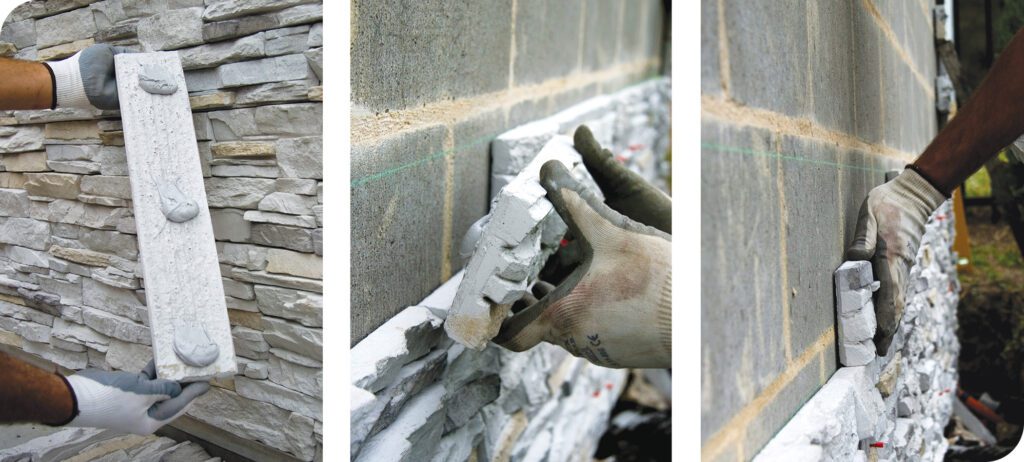
- stone and facade panel fixing
- tunnel and infrastructure works.
These applications require high-viscosity gels and pastes that will hold their position without sagging or running before cure. They are designed with enough “body” to stay where they’re applied, maintain bond line thickness, and allow shaping or gap filling.
Products such as Megapoxy P1 or PM-based are typically used in these conditions, where control and stability are critical.
Filling voids completely – but under control
In grouting and deep section pours, the viscosity behaviour shifts again.
Here, the epoxy must:
- flow through voids and around embedded elements
- fully encapsulate the area
- self-level without trapping air
- while still curing in a controlled, predictable way.
Typical applications include base plate grouting, anchor bolt installation, grouting under machinery, and deep section pours. These jobs call for flowable epoxy grouts, like Megapoxy 206 Ultra or Deep Pour Grout, which are formulated to move easily while remaining stable and minimising shrinkage.
Priming, sealing and protective coatings
Low-viscosity systems are used for priming and sealing, often for flooring, allowing the epoxy to penetrate porous concrete and bind the surface before coating.
Higher-build, higher-viscosity coatings are used where film thickness and durability are vital, such as lining water‑infrastructure tanks that stand up to chemicals, moisture and wear.
The balance here is between penetration and build: both key to long-term performance.
Large-scale infrastructure: one project, multiple viscosities
In practice, most major projects don’t rely on a single viscosity: they require a system.
A bridge project, for example, may involve:
- a non-sag structural adhesive (eg Megapoxy PME SBA) to bond precast segments
- a high-strength paste (eg Megapoxy P1) to fill gaps and irregularities
- a flowable grout (eg Megapoxy 206 Ultra) to secure bearings and distribute loads
Each product performs a different role, but together they ensure effective load transfer and long-term durability.
Choosing your solution
| Job / application | Epoxy purpose | Recommended viscosity | Example Megapoxy products |
| Hairline and shrinkage cracks | Flow into finer cracks and seal below the surface | Extra-low to low | HX, H |
| Deep structural cracks (crack injection) | Inject under pressure to full crack depth and restore bond | Extra-low to low injection epoxy (with paste adhesive to secure injection balloons) | HX or H / PM (bond balloons) |
| Wider cracks and surface repairs | Stay in place, fill voids and allow trowelling | High-viscosity paste | HT, P1 |
| Structural bonding (precast, stone) | Provide high-strength, gap-filling adhesion, often vertical | High-viscosity paste | PM, P1 |
| Priming and sealing | Penetrate and seal concrete floors and other porous substrates | Low viscosity | LVS, H |
| High-build coatings | High build film thickness | Medium to high viscosity (high-build coating systems) | MC |
| Grouting and deep pours | Flow, fill and fully surround voids | Flowable/ controlled viscosity | 206 Ultra, Deep Pour |
Unsure about which viscosity is right for your application? Megapoxy can help you specify a system that performs based on your real project conditions. Talk to our team, use our quick solution selectoror explore free industry resources.